
The New Saudi-Led Maritime Defense Alliance: Reshaping Strategic Balances in the Red Sea and East Africa
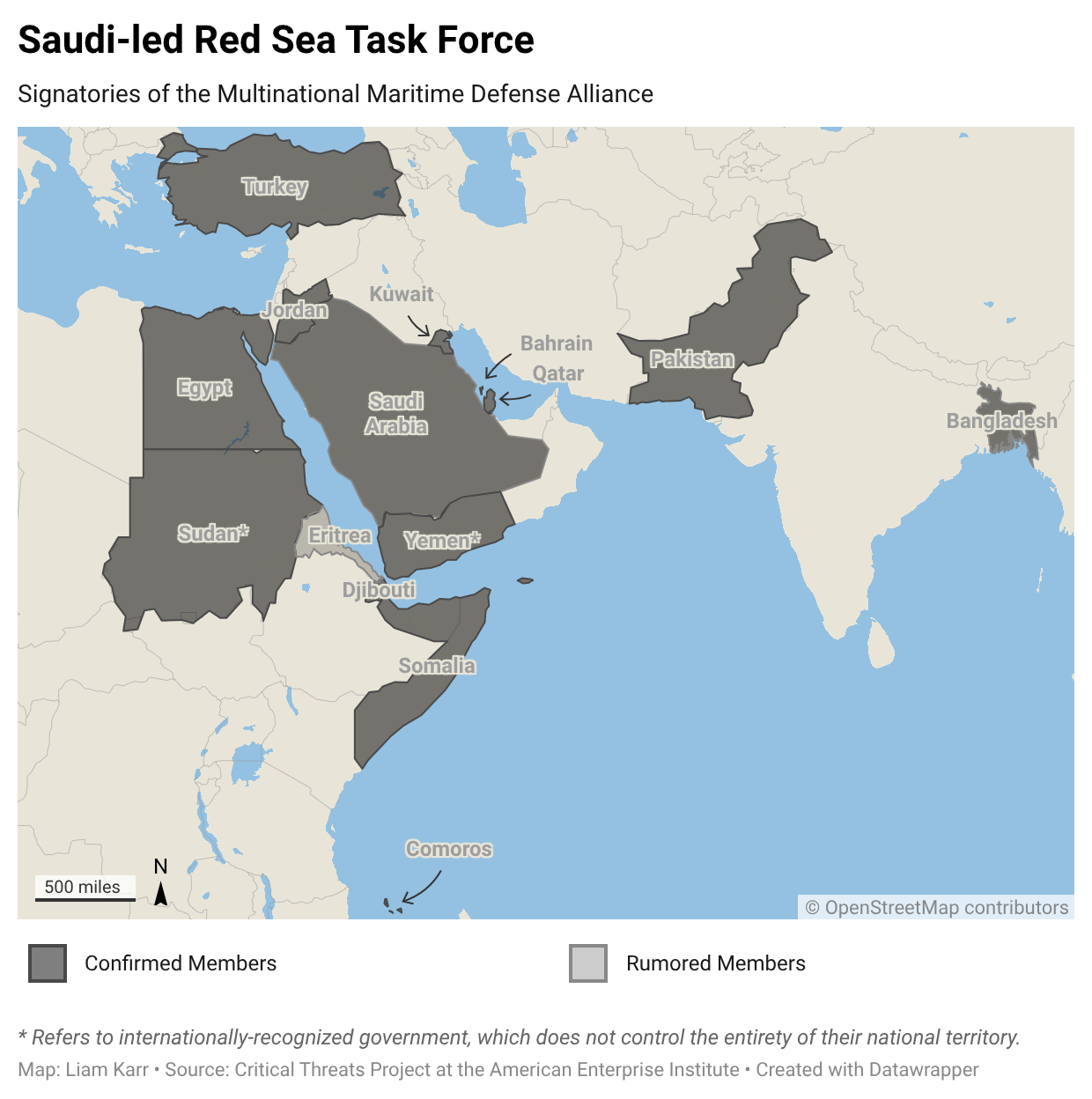
The Red Sea region is gradually undergoing a transformation from a crisis primarily associated with the Houthi movement into a broader reconfiguration of the regional security system and the balance of power. This was illustrated by the Saudi announcement on 30 July of the formation of a multinational maritime alliance involving 14 countries, most notably Egypt, Djibouti, Somalia, Sudan, Türkiye, Pakistan and Qatar.
The New Saudi-Led Maritime Defense Alliance: Reshaping Strategic Balances in the Red Sea and East Africa
The Red Sea region is gradually undergoing a transformation from a crisis primarily associated with the Houthi movement into a broader reconfiguration of the regional security system and the balance of power. This was illustrated by the Saudi announcement on 30 July of the formation of a multinational maritime alliance involving 14 countries, most notably Egypt, Djibouti, Somalia, Sudan, Türkiye, Pakistan and Qatar. The alliance comes at a time when Houthi threats have directly affected international shipping, with maritime traffic through the Bab el-Mandeb Strait declining by approximately 20%, while attacks on Saudi-linked vessels and continued targeting of commercial ships are accompanied by increased Houthi missile and drone capabilities. Consequently, the protection of maritime navigation constitutes the immediate driver, but it does not, by itself, explain the nature and composition of the alliance.
Saudi Arabia and Egypt stand out as the central pillars of this arrangement, given their maritime capabilities and economic and strategic interests in the Red Sea, while the participation of Türkiye and Pakistan gives the alliance additional military and political depth. Its composition also reflects an emerging trend toward establishing the principle that Red Sea security and governance should primarily be the responsibility of the states bordering it, with Saudi Arabia and Cairo consequently strengthening their position in leading this course.
The absence of the UAE and Israel carries a clear political significance. The Saudi-Emirati rivalry in the Red Sea and the Horn of Africa continues despite maintaining official relations, while Israel's absence reflects the continuation of Saudi-Israeli distancing amid regional developments. Conversely, Sudan and Somalia's participation, along with Djibouti's, provides the initiative with an important African dimension and could open the way for expanding cooperation to include combating piracy, arms trafficking, and organized crime.
Accordingly, the initiative should not be viewed merely as a military mechanism for confronting the Houthis and protecting maritime navigation, but rather as part of a broader competition over the management of the Red Sea and the identification of the powers that will exercise influence and play a role in regional security. At its core, the alliance reflects an effort to strengthen Saudi and Egyptian regional leadership, while involving the Arab and African states directly concerned with the security of this strategic corridor.